Journal · Workplace
What should coworking space photography show?
Coworking space photography should show each thing a member can pay for, which usually means the open desks, private offices, meeting rooms, kitchen, phone booths and reception, each photographed clearly enough that a stranger can judge it from a listing. I shoot each location as its own commission at my standard rates, £700 for up to 20 finished images with up to 3 hours on site or £1,200 for up to 40 with up to 6 hours.
Workplace
Start from what you are selling
Most operators already have plenty of phone photos of their space. The usual gap is a clear picture for each product on the price list, which general shots of a nice lounge do not give you. Someone weighing up a day pass wants to see where they would sit. A small team pricing a private office wants to see that office, with the door, the window and the desks, and is less bothered about the lounge. Meeting room hire is often sold to people who will never take a membership, so each room needs a frame that shows its size, the table and the screen.
Before the shoot I ask for the membership page and the room hire page and write the shot list from those. If an office for four and an office for ten are sold separately, they each get photographed.
This is a different brief from recording the fit-out for the designer or contractor, which is about the design and the build. That side is covered in how to photograph an office fit-out. Both can be done on one visit, and the licensing section below explains how that is charged.
Workplace
The spaces that each need a picture
Reception and arrival. This is the first image on most location pages, so it needs to show the desk, the signage and enough of the floor beyond it to tell people what kind of place it is.
Open desks. A wide of the floor, then a closer frame at desk height showing the chair, the power and the light from the window, since that is what a day pass buyer is checking.
Private offices. One frame from the door and one from the far corner looking back, so the size reads honestly. Making a small office look large with a very wide lens only disappoints people at the viewing.
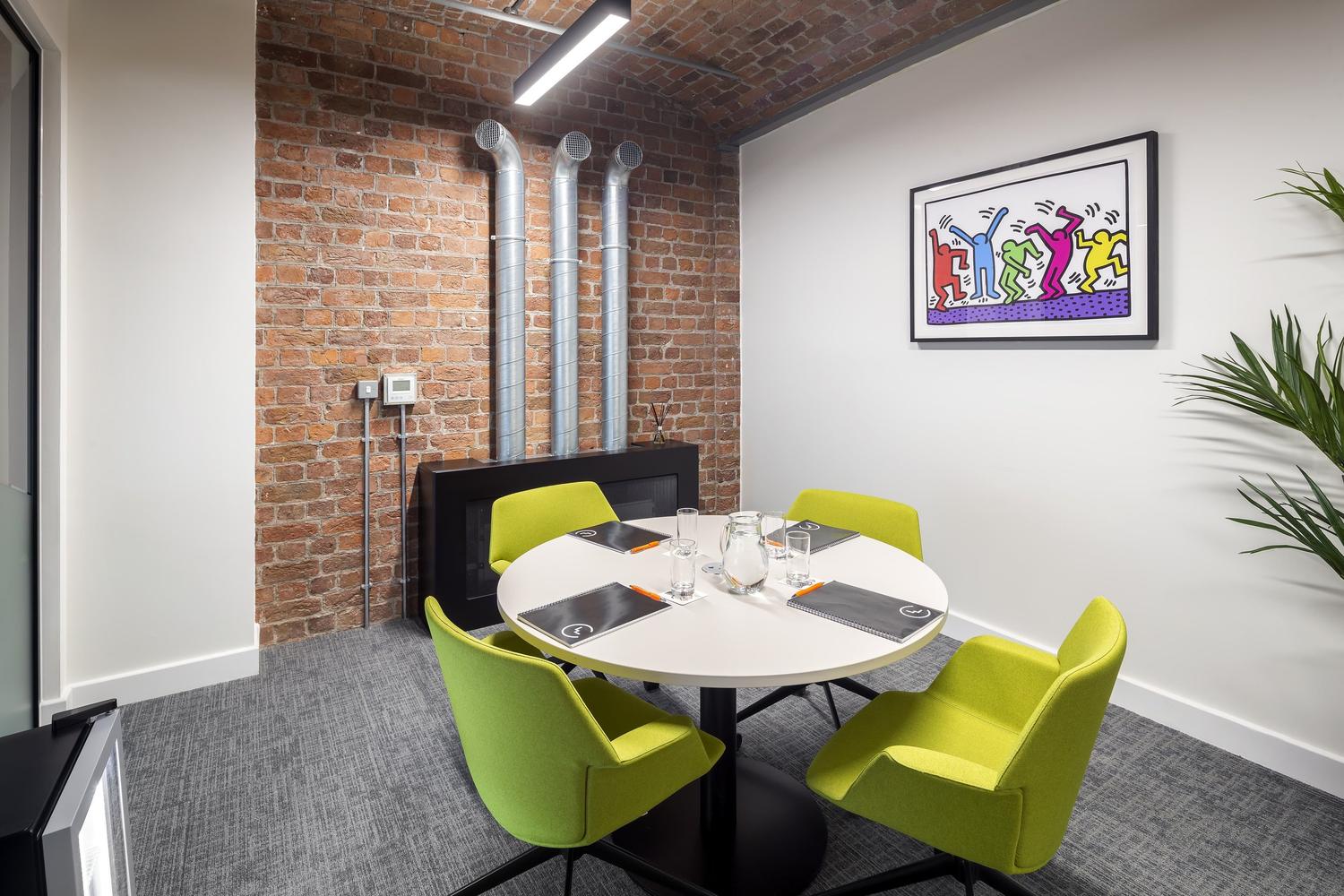
Meeting rooms. Each bookable room on its own, with the table set and the screen on, and ideally the whole table in frame so people can count the seats.
Kitchen, lounge and breakout. These carry the feel of the place, and they are where a few people in the frame help most.
Phone booths and focus rooms. They are small and awkward to light and often get left off, though members do ask about them, so I get one clean frame of each type.
Branding and details. The logo wall, signage and any finishes that repeat across sites, which are handy for social posts and press.
On the Co-Work London commission, across their Moorgate and Cannon Street locations, the brief covered the lounges, focus rooms and meeting spaces along with the fit-out and branding details. The images were for marketing the locations, so the priorities were accurate colour, straight verticals and frames that show each space clearly.


Workplace
Members in the frame, or empty rooms
An empty coworking floor can look like a furniture showroom, while a full one on a busy morning looks chaotic and means asking everyone in it for consent. I normally aim for a mix. The rooms that are sold on their layout, meeting rooms and private offices in particular, are shot empty and tidy so people can see exactly what they would be booking. The lounge, kitchen and open desks get a few people in them so the place looks used.
The people shots work best when they are arranged in advance. Two or three members or staff who are happy to be photographed and carry on working are enough for most frames, and anyone who has not agreed is kept out of shot.
There is a trade-off. Frames with people take longer to set up, and they tend to date sooner as clothes, laptops and furniture change. The clean empty frame of each room is usually the one an operator keeps using on its booking pages for years, so I get one of every key space even when the people shots end up as the favourites.
Workplace
Working around members during opening hours
Most operators cannot close a floor for a morning, so the usual plan is to start early, before most members arrive, and get through the spaces that need to be empty first, normally reception, the open floor and the kitchen. Once people start coming in I move on to the meeting rooms and offices that have been held back for the shoot.
That needs a bit of booking ahead. Block the meeting rooms you want photographed on your own booking system for the morning, and keep at least one private office of each size free, or agree a time with the tenant. A let office is someone else's workspace, so it is only photographed with their permission and with their screens and papers out of sight.
My rates page notes that live, occupied buildings take more time than a quiet finished one, and a coworking floor is a good example. One person from the community team who knows which rooms are free saves a lot of waiting. If the list is long, the 6 hour rate is usually the safer booking, because time spent waiting for someone to finish a call in a booth comes out of the hours on site.


Workplace
Keeping several locations consistent
When an operator has more than one site, people compare them on the website, often side by side, and the photos should make that a fair comparison. I use the same camera height for the same type of room, the same angles for equivalent spaces such as a four-person office at each site, and the same retouching, so any difference people notice comes from the buildings themselves. It is the same discipline as a shop rollout, which I go into in retail store photography.
Two things are more specific to coworking. Time of day matters more than people expect, because a floor shot in morning sun and another shot under evening lighting can look like two different brands. The dressing should also match, with the same plants, cushions and kitchen kit out where the operator uses them and the same clutter cleared at every site. I send a written shot list per room type before each visit.
Workplace
What it costs for one site or several
Each location is booked as its own shoot at my published rates. £700 covers up to 20 final retouched images with up to 3 hours on site, which generally suits a single floor with a handful of meeting rooms. £1,200 covers up to 40 images with up to 6 hours, which is the better fit for a larger building or a site with a lot of room types. Extra images from the same contact sheet are £50 each, and travel within London Zones 1 to 4 is included.
So an operator with two smaller sites in central London would normally pay £1,400 for both on the £700 rate, booked as two shoots. Each booking takes a 50% deposit, cleared at least 5 days before the shoot, and the rest is due when the contact sheet arrives.
The fee licenses the images for your own marketing. Coworking floors are often designed by an interiors firm and sit in a building owned by a landlord, and either may want to use the photographs. Each extra company adds 30% of the invoice as an extended licence, arranged before you are invoiced, and you decide how to split the cost with them. On a £700 shoot, adding the landlord makes the invoice £910. Licensing after invoicing is still possible, without the shared-cost discount. The full terms are on the rates and licensing page.
Common questions
Frequently asked
How much does coworking space photography cost?
I price each location as its own shoot. £700 covers up to 20 final retouched images with up to 3 hours on site, and £1,200 covers up to 40 images with up to 6 hours. Extra images are £50 each, and travel within London Zones 1 to 4 is included.
What photos does a coworking space need for its website?
One clear image for each thing you sell. That normally means reception, the open desks, each size of private office, every bookable meeting room, the kitchen or lounge and the phone booths.
Should coworking photos include people?
A mix usually works best. Meeting rooms and private offices are shot empty so people can see what they are booking, and the lounge, kitchen and open desks include a few members or staff who have agreed to be photographed.
Can you photograph a coworking space while it is open?
Yes. I start before most members arrive, shoot the spaces that need to be empty first, and move to meeting rooms and offices held for the shoot once people come in.
How do you photograph several coworking locations so they match?
Every site is shot from the same written shot list, with the same camera heights and angles for equivalent rooms, at a similar time of day, and retouched the same way.
Can our landlord or interior designer use the photos?
Yes, with an extended licence. Each extra company adds 30% of the invoice, arranged before invoicing, and the client who books the shoot decides how to split the cost with them.
Where to next