Journal · Hospitality
What makes good hotel and hospitality photography?
Hospitality photography has to sell a feeling as much as a room. That usually means shooting at the hour the venue actually looks its best, which is rarely mid-morning.
Hospitality
Atmosphere is the product
A hotel room shot flat and bright under working lights is an inventory photograph. It tells a guest the bed exists. It does not tell them what an evening there feels like, which is the thing they are actually buying.
Hospitality interiors are usually designed around low, warm, layered light: lamps, pendants, candles, a lit bar back. Photographing them at full daylight with the house lights up throws away the design and flattens exactly the mood the designer built in through layers of low-level fittings rather than one bright overhead source. The trick is to shoot at, or convincingly near, the hour the room was designed for, which for most bars and restaurants is evening, and for a hotel room is closer to the light of a lamp-lit night than a bright working morning.
Hospitality
Balancing a warm interior against the world outside
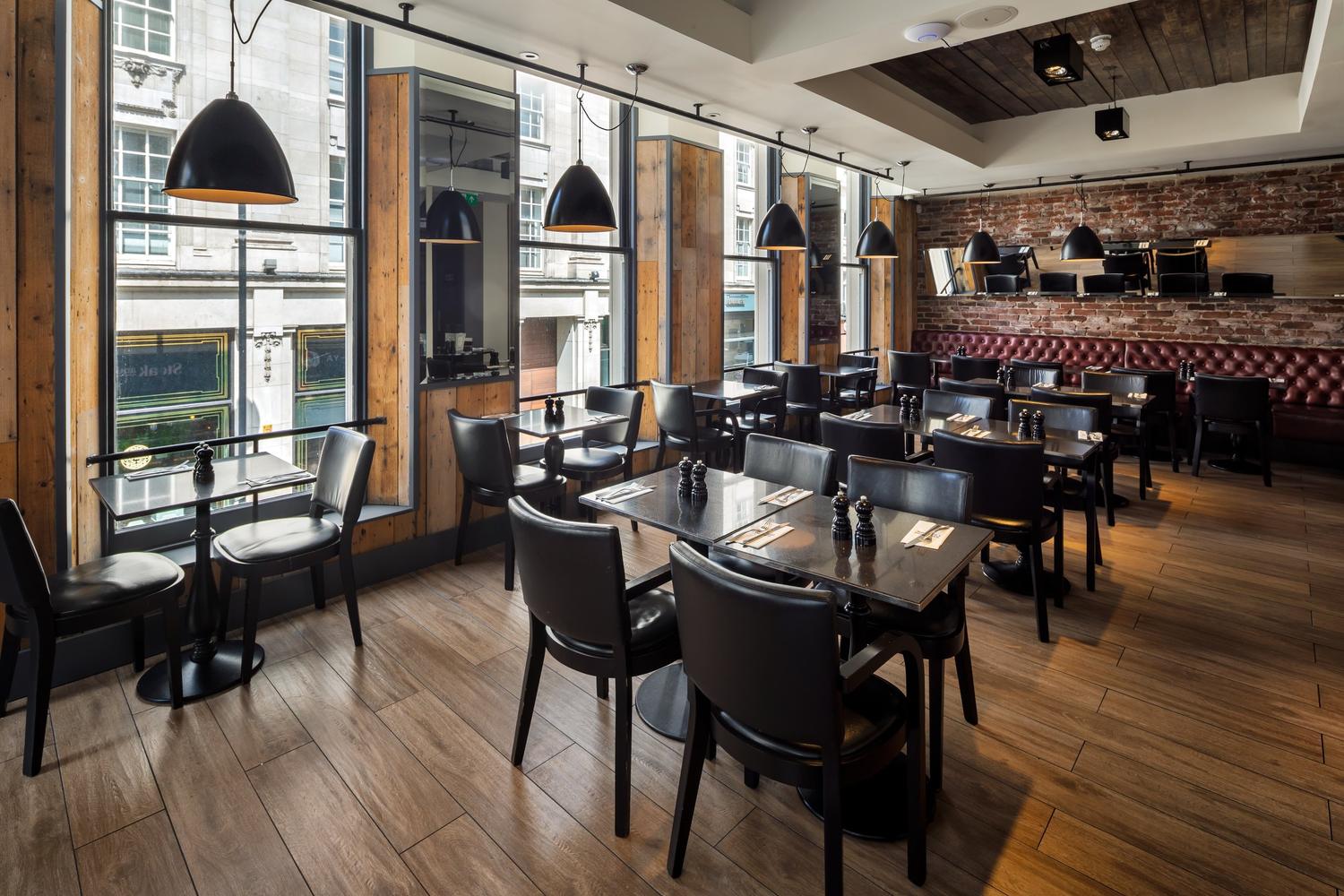
A venue with any glazing to the street or a view has the same problem as an architectural dusk shot: the warm, layered light inside and whatever is happening outside the glass need to sit in balance in the same frame. Shoot too early and the daylight outside overwhelms the interior's own lighting, leaving it looking dim and under-designed by comparison. Shoot too late and the glazing goes black, losing the sense of place and any view worth showing.
As with architectural twilight photography, that balance point is a narrow window rather than an all-evening opportunity, which is one of the reasons hospitality shoots are timed around a specific hour rather than booked as a loose evening slot.
Hospitality
Shoot around service, not through it
Empty venues photograph cleanly but can look sterile. Full venues look alive but are chaotic, and every guest in frame is a consent question.
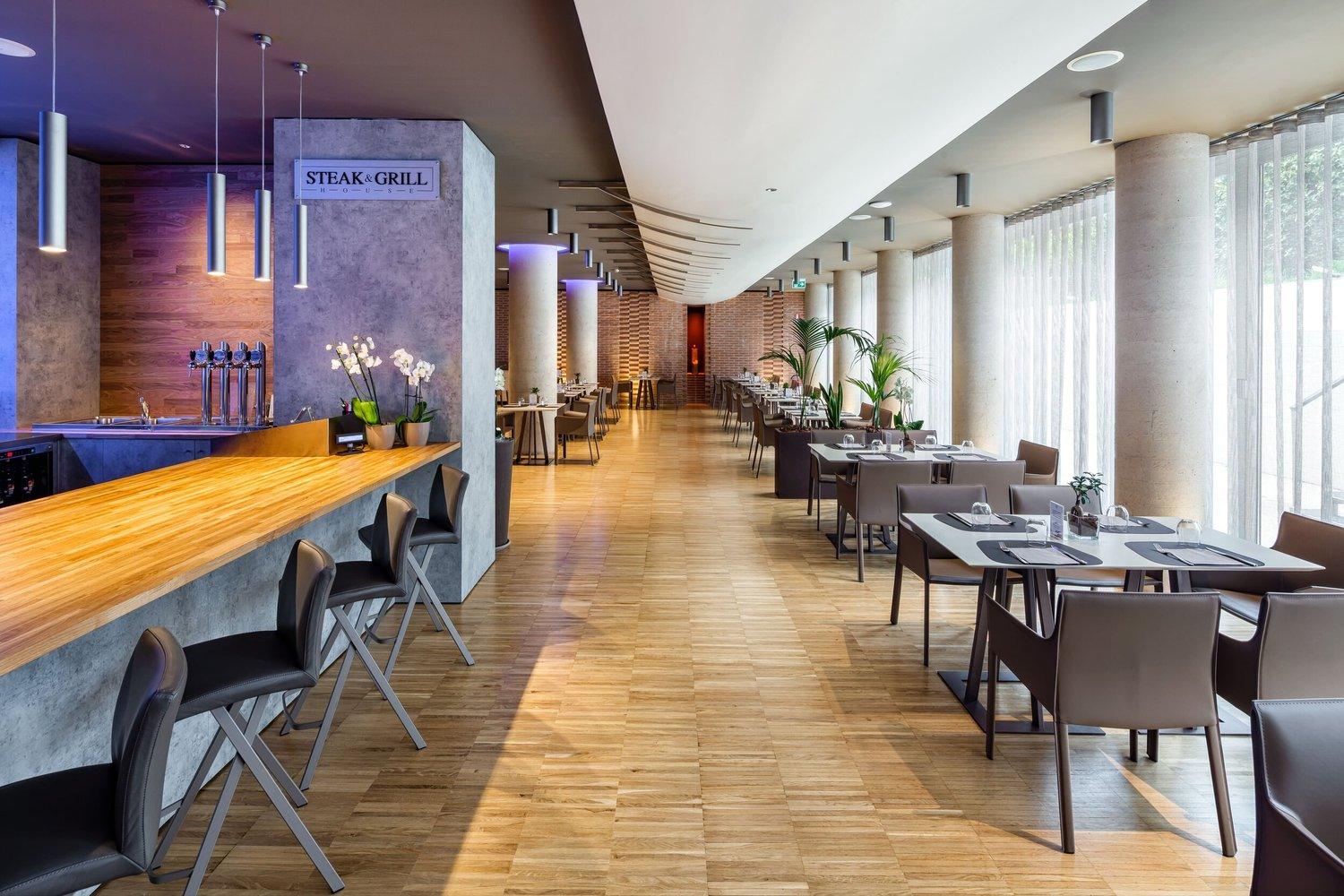
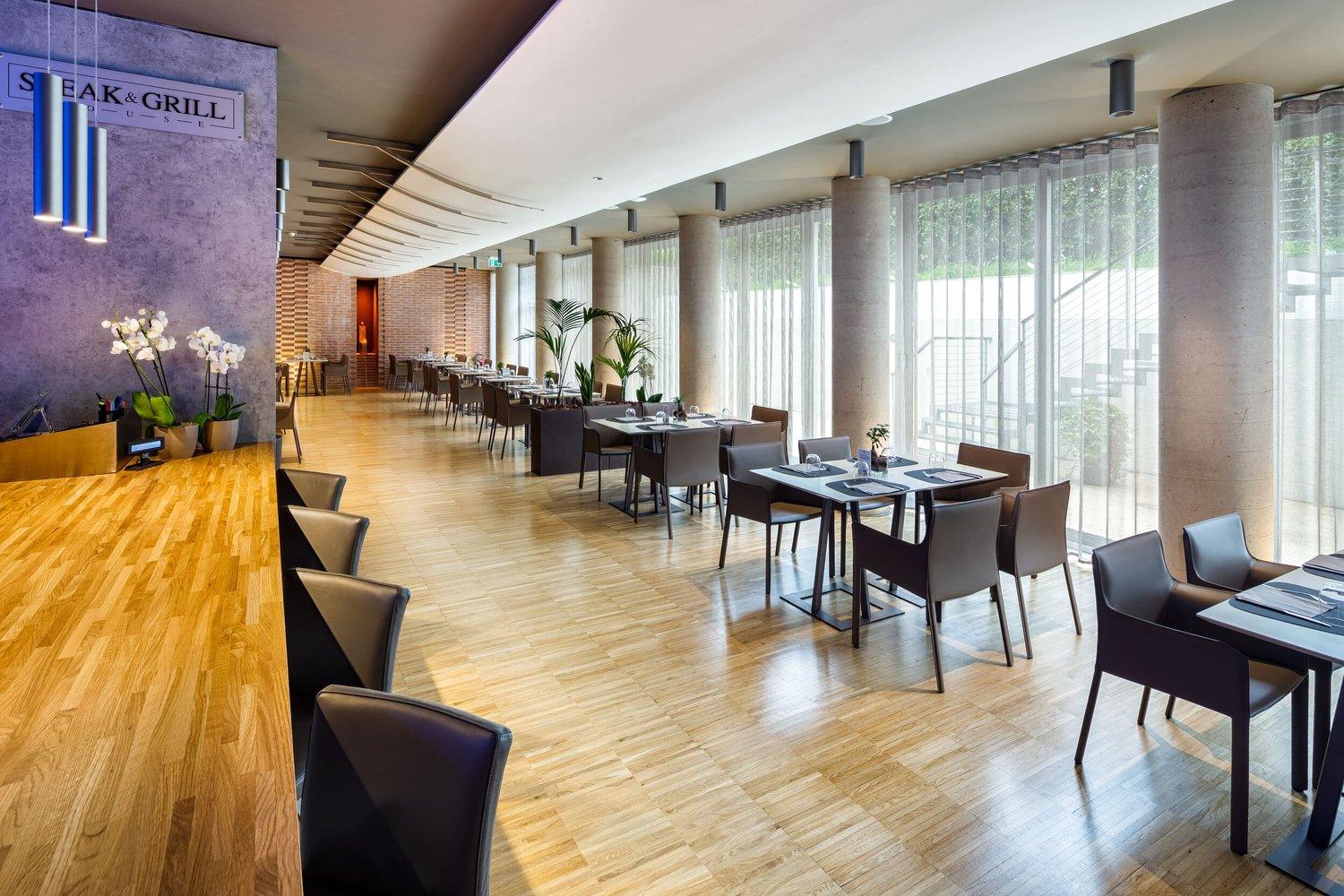
The usual answer is the hour before service: the room dressed and lit as if open, tables set, glassware polished, and a small number of briefed people if you want life in the frame. It gives you the atmosphere without the mess or the permissions problem, and it means nobody is trying to work around a paying customer's evening while a camera and tripod occupy the best table in the room.
Hospitality
Food and drink as part of the set
Where food and drink are part of the offer, they usually go in the same visit as the interiors rather than as a separate shoot, so the set reads as one venue rather than two unrelated jobs stitched together. The practical challenge is speed: plated food changes within minutes, garnish wilts, ice melts, condensation forms or disappears, and steam is only there for seconds after a dish leaves the pass.
That means food and drink frames are usually planned and lit in advance, camera and light set up and tested on a stand-in plate, so that when the real dish arrives it goes straight in front of a ready camera rather than sitting under lights losing its condition while the shot is composed around it.
Hospitality
What a venue needs shot
Beyond the obvious wide views, the images that get used hardest tend to be the arrival (what a guest sees walking in), the signature detail (the bar, the fireplace, the staircase), the food and drink if it is part of the offer, and one strong exterior at dusk for listings and press.
For bars and restaurants specifically, the room at its busiest hour is the shot that sells bookings, and it needs the most planning.
Hospitality
Hotel rooms and guest-facing spaces
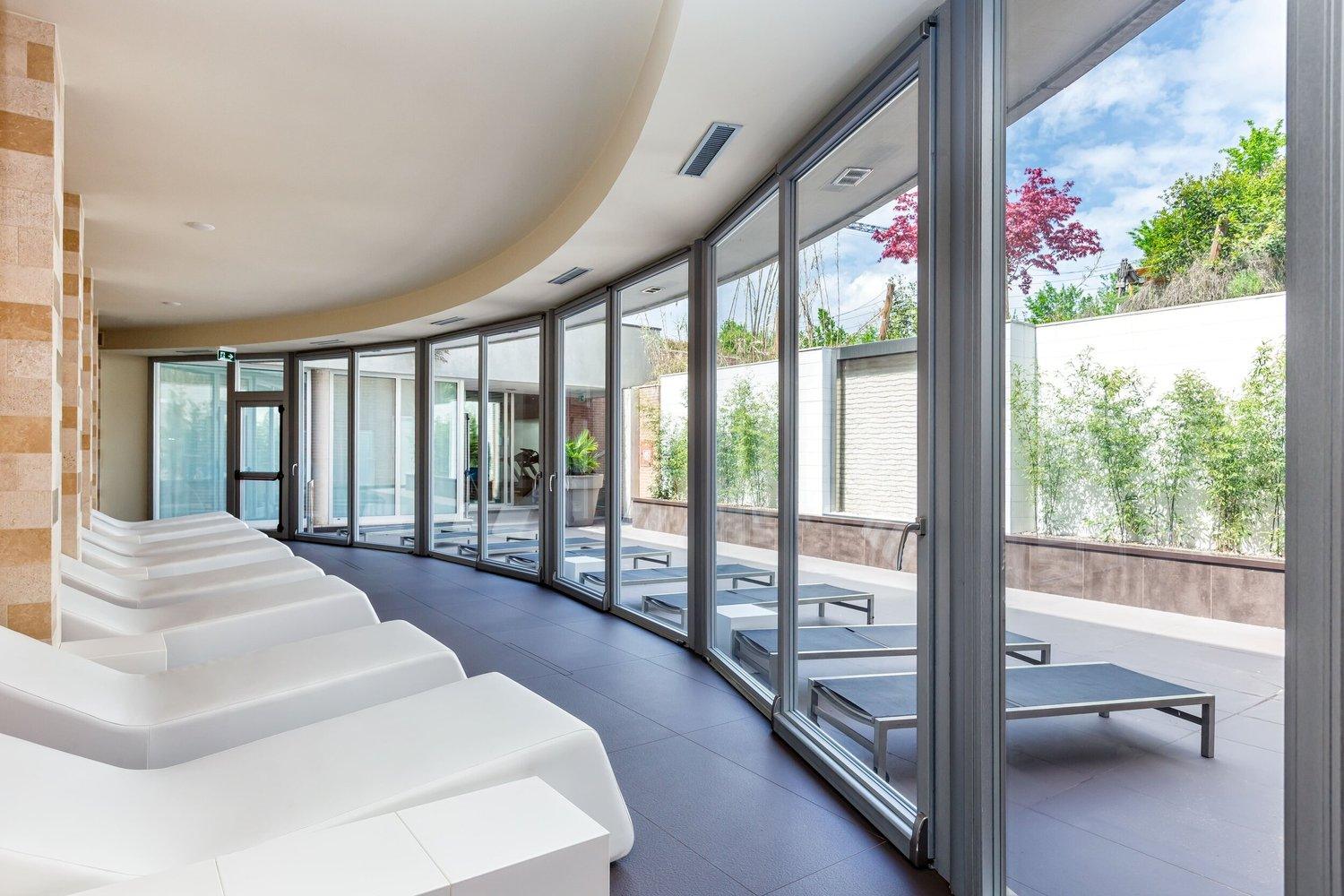
A hotel brief usually needs its own logic alongside the public spaces. Guest rooms benefit from a light, considered dressing pass, bed properly made and styled, curtains and lighting set deliberately, rather than shot exactly as housekeeping left it. Bathrooms need particular care with reflective surfaces and mirrors, which show every light stand and camera unless the angle is chosen carefully. And corridors, lifts, and the route from arrival to room are easy to skip but shape a guest's actual first impression as much as the room itself does.
Common questions
Frequently asked
What makes good hotel photography?
Photographing the venue at the hour it was designed for, usually with its own warm layered lighting rather than flat daylight, so the images convey atmosphere rather than just documenting that a room exists.
When should a restaurant be photographed?
Usually in the hour before service, with the room fully dressed and lit as if open. That gives you the atmosphere of a working venue without the chaos of a full service or the consent issues of photographing paying guests.
Do you photograph food as well as interiors?
Food and drink are often part of a hospitality brief where they are part of the offer, shot alongside the interiors on the same visit so the set reads as one venue rather than two separate shoots. Because food changes condition within minutes, the lighting and composition are usually planned on a stand-in plate before the real dish arrives.
Can you photograph a venue while it is open?
It is possible but harder: every identifiable guest is a permissions question and the room cannot be controlled. Most venues get better results from a pre-service shoot with a few briefed people in frame.
How do you photograph a venue with a lot of glazing to the street?
By timing the shoot to balance the warm interior lighting against the world outside the glass, similar to a twilight architectural shot. Too early and daylight overwhelms the interior, too late and the glazing goes black, so there is a specific window that works best.
What is often missed in hotel photography?
The route a guest actually experiences: arrival, corridors, and lifts on the way to the room, not just the room and the public spaces. Bathrooms also need particular care, since mirrors and reflective surfaces show lighting equipment unless the angle is chosen carefully.
Where to next